

Choosing Kindness: Why Correcting a Loved One With Alzheimer's Doesn't Always Matter

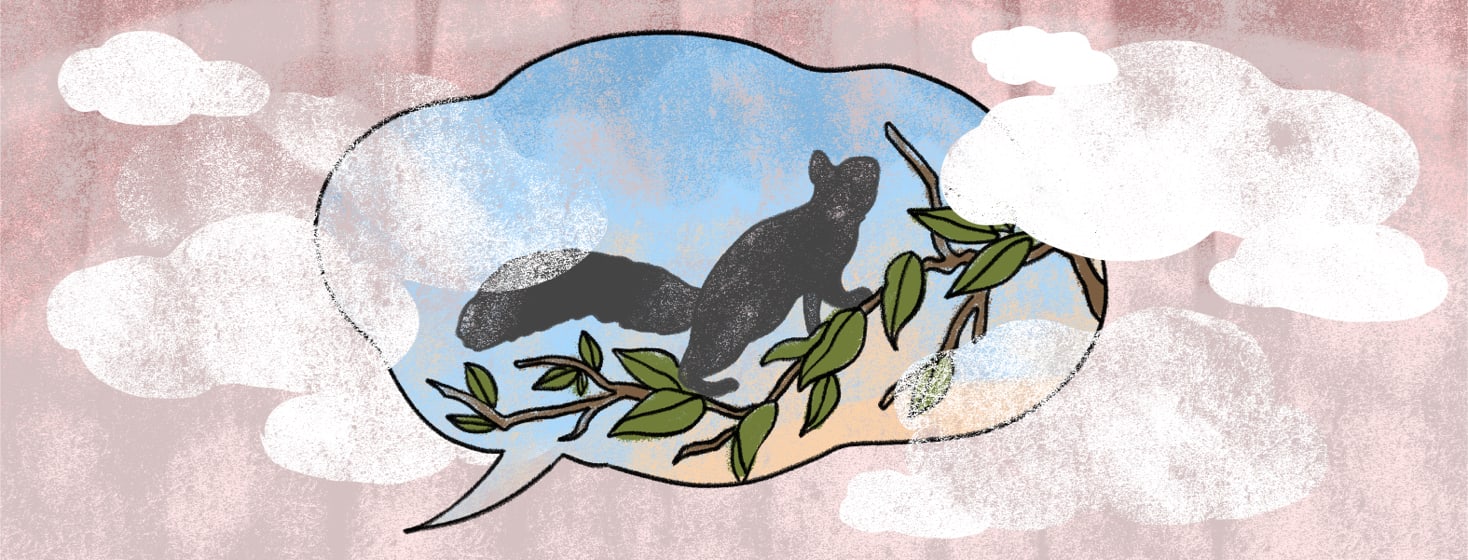
"Look at the squirrels." And with that, the discussion began. My loved one was able to describe what she was seeing in our backyard. She was seeing squirrels. I looked out back and saw nothing. I saw no squirrels. Two weeks ago, I may have corrected her and mentioned that there were no squirrels in sight. And that is how it goes when you are caring for someone with Alzheimer’s disease.
I realized I didn't need to correct her — this is called "therapeutic fibbing."
Featured Forum
View all responsesCorrecting vs. therapeutic fibbing
Immediately, I pivoted from the squirrels in the backyard to the general significance of squirrels in her life. My loved one grew up in Mississippi, where people farmed and hunted and sometimes squirrels were on the menu. This is not my thing, but my loved one's family was quite poor, and that's just what they did. It was not unusual, so I talked a little about that as she continued to look for squirrels in the yard.
In that instant, I realized that I didn't need to correct her or bring her into my reality. It really was not that important in the big picture. Squirrels do come and go here on Long Island, and I am sure that she has seen plenty of them in the past, as have I. They are super cute. But did it matter if they were there in that instant or not? But what does matter? I later learned that this small act of redirection has a name: therapeutic fibbing.
Am I supposed to agree with everything?
So, is this now the trajectory of my interaction with her? Am I supposed to agree with everything she thinks, feels, says, sees, smells, tastes? Do I dive headfirst into this and suspend what I believe to be true? Do I do this because it makes her feel better? At what point does this become dangerous? Am I making up stories to keep the peace? Is this what people mean by therapeutic fibbing, or is it something else entirely?
Does therapeutic fibbing make me a liar?
What am I becoming as a caregiver? In the film and television industry, we tell stories, both real and imagined. It is our job to make our audience feel as if they have entered this reality for a couple of hours, at their pleasure and entertainment. Am I becoming a storyteller in my real life? Do I enter this imaginary world in my own very real house?
Am I telling lies? Am I making stuff up? Am I doing this out of love and care, or just to "get through this?" At what price do I tell the truth? These are questions I am beginning to wrestle with as this disease progresses. I've since come to understand that there's a difference between lying to deceive and therapeutic fibbing, which is meant to protect and comfort.
Why therapeutic fibbing can be the kindest choice
I am choosing kindness over being right through therapeutic fibbing
Here is my answer. Yes, I like the person I am becoming. I am choosing to be kind over being right. I am choosing to be loving rather than correct. I may need to bend the truth a little for the sake of my loved one's emotional well-being. This is therapeutic fibbing — I give her the truth she can handle because I love her. Whatever I do to correct her now won't matter soon enough anyway.
What do you think? How do you process these types of situations? Do you have squirrels in your backyard as well?
Join the conversation