



The Joy of Holding Hands

I remember, as a young girl, holding my father's hand. Holding Dad's hand made me feel safe. As I grew older, our hand-holding shifted to high fives, pats on the back, and handshakes, but our love and admiration for one another never changed.
Navigating Dad's Alzheimer's diagnosis
When Dad was diagnosed with Alzheimer's disease, I understood that our relationship was in for a change. I knew that he would require additional support and guidance in all facets of life over time. I was up for the challenge and promised to give my all to his care.
During my time as his caregiver, I observed accompanying shifts in his mood and behavior due to the painful effects of the disease. From Dad's new eating and sleeping patterns to bouts of frustration, anger, and confusion, we found comfort in sense of touch, specifically through holding hands.
This or That
Do you find physical touch comforting?
Finding peace through holding hands
Grasping Dad's hand during his moments of hardship, such as when he became overwhelmed or frustrated with tasks he used to do more easily, soothed him. When Dad wandered around the house and yard looking for his missing ladder, work gloves, or tools, taking his hand and leading him on a short walk worked wonders.

My need to grasp my father's hand supported me too, and relieved the anxiety I experienced not knowing what would come next as we navigated each new day.
The impact of sense of touch
The tactile sense is powerful, and I learned this even more strongly as Dad and I spent more time together. When Dad and I ventured out to the park, crossed the street, or visited the store, he grasped my hand and held it tight.
I could sense that reaching for my hand was my father's way of feeling safe and secure. Each time Dad reached for my hand, I could feel that he was comforting his fears as the disease progressed and took over his mind and body.
I recall not letting go unless I had to, and this feeling took me back to when I was a young girl, when I appreciated holding my father's hand. Over time, the more we held hands, the more it soothed his worries. Prioritizing the sense of touch and Alzheimer's care became our unspoken language.
Maintaining familiarity and safety
Caring for a loved one with Alzheimer's is hard and makes one's emotions feel like they are riding a roller coaster. While I had my share of doubts about whether I was providing all I could for my father—from preparing meals that he didn't care for to thinking he could do more on his own—it didn't always click. During these times, I learned that it was okay to feel defeated, but what was most important was that I picked myself up and tried again.
As the months and years passed, I learned that familiarity and routine proved rather successful, just as physical contact did when he needed it most.
When Dad and I walked in the park, there were times when he would let go of my hand and step away to a safe distance. However, he would always return and take my hand. This was not only touching but also helped ensure comfort and was a convenient, safe way for us to venture out. Holding hands reassured Dad that I was there for him.
The lasting power of touch
They say the power of touch has healing properties, and I observed this firsthand as Dad and I held hands. As we held hands, it wasn't only special and comforting; it was a bond we created that would carry us through his battle with Alzheimer's.
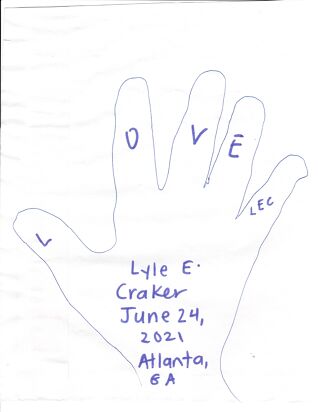
Holding hands with my father was a way for us to share care and compassion. I cherish a memento I created with my dad: a tracing of his hand. His hand tracing is in my desk drawer, and I take it out often and remember how lovingly his hand grasped mine.
Join the conversation