

What Is It Like To Live With Alzheimer’s Disease?

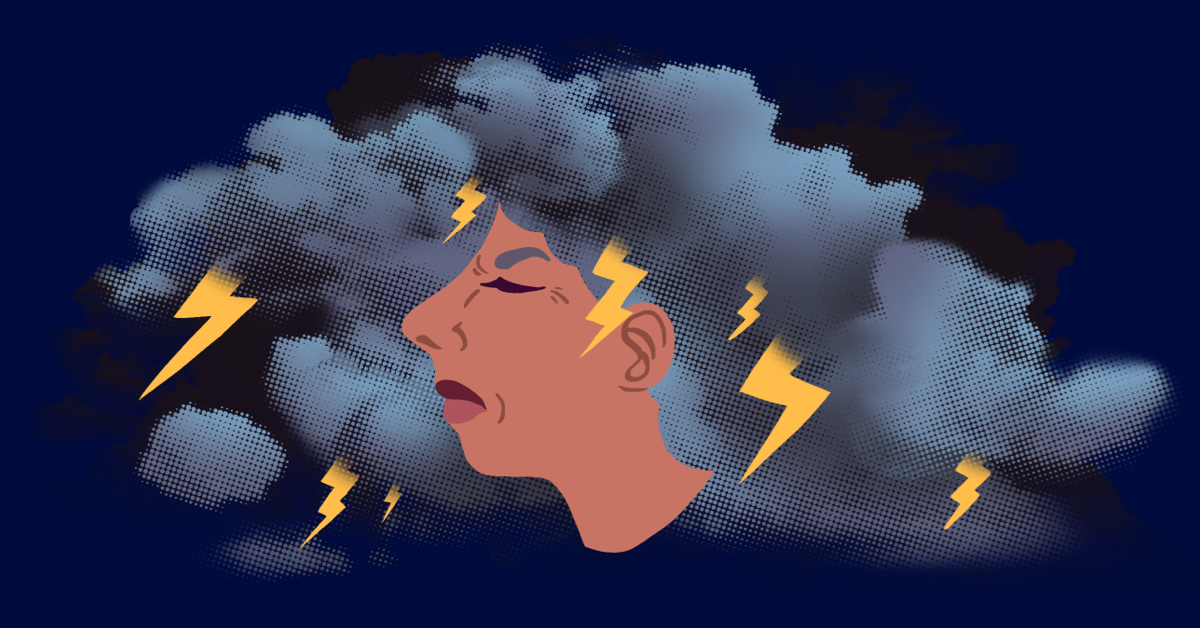
What is it like to have Alzheimer’s? The following are some words that people I know who have the disease use to describe their minds, including me:
- Brain fog
- Confusion
- Spacey
- Out-of-body experiences
- Crazy
- Noisy
- Hectic
- Spinning
A unique journey for every brain
Alzheimer’s affects everyone differently. My experiences can be totally different from those of someone else with the diagnosis. There are certainly common threads, but what one person lives with, another may not. The reality of living with dementia is never a "one size fits all" experience.
Life with Alzheimer’s can be blurry
One analogy I came up with to describe what it's like to live with Alzheimer's is the feeling of having your eyes dilated. For me, I can’t do anything for several hours after a dilation because everything is blurry. I can’t do everyday things like cook, read, drive, or watch TV. Everything is distorted.

Living with Alzheimer’s, for me, is constantly blurry. I’m not blurry every day, but there are many days when I am. I can’t make sense of things. I don’t know right from wrong. I can’t trust myself. I need support. I feel as if my head is going to explode because nothing seems normal.
Managing triggers and overstimulation
On a “good day,” one little thing can happen that suddenly turns my world into a blurry day. A noisy environment can send me down a rabbit hole very quickly. My brain is not capable of filtering out the noise, and it becomes a constant burden, preventing me from thinking or reasoning.
Little things add up to big things in my brain. If someone says something to me the wrong way, I will take offense, and it builds up. There has to be order in my day—a routine that I don’t veer away from. If I do, everything seems wrong to me, and I can’t rectify it in my brain. I love to travel, but it is hard because things are new and I can get easily disoriented—but I still want to do it.
The importance of support and flexibility
I need my rest to reset my brain. I try not to get overstimulated and try to control my environment as much as I can. I know socialization and exercise are important for brain health, and I have to be mindful of what I can and cannot do. It is hard to say no to certain things, even if I know they can be a trigger for me—but knowing what it's like to navigate your own triggers can be valuable information for you and your loved ones.
My friends and family know most of my triggers and are quick to realize that we can’t do certain things because of them. We try to find workarounds—sometimes they work, and sometimes they don’t. Flexibility in plans is vital when people are trying to do things with me.
I caution those caring for their loved ones who are experiencing what it's like to have Alzheimer's that just because you want to do something, or because I used to like doing something, doesn’t mean that I want or can do it now.
Please, don’t overstimulate us. You have to constantly be aware (as hard as it is) that although we look the same, we are not the same person you once knew.
The reality of life with Alzheimer’s
It is hard to understand that those of us living with Alzheimer’s live in our own reality that you can’t see. We often can’t tell you about it. We do, however, still have feelings and emotions that are front and center, even if they can be fractured at any second.
Join the conversation